

Time Line

 2 out of 3
Describe what Emma might be doing from these pictures of clocks which show important times in her day.
Problem
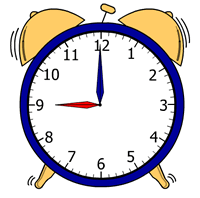
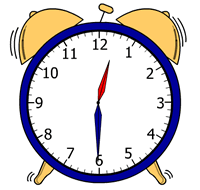
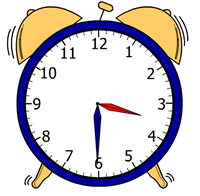
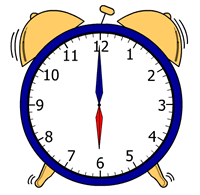
The clocks below show some important times during Emma's day.
Image
| Image
|
Image
| Image
|
Using the times on the clocks, can you describe what you think Emma might do in a day?
Getting Started
You could use the clocks in the order they have been drawn, so top left first, then top right, then bottom left, then bottom right.
Perhaps you could think about what you do at each of these times?
Student Solutions
The majority of you answering this problem had very similar ideas. Some of you explained very clearly how you had worked out your solution. Emily from Aldermaston C of E Primary School said:
I think that the best way to solve 'Time Line' was to use logic e.g $6$ o'clock is a bit early to be up so it must be in the evening.
I looked at the times shown on the clocks and thought about what I did each day at the times shown. This is what I got:
$9$ o'clock: Start of School
Half past $12$: Lunch Time
Half past $3$: End of School
$6$ o'clock: Dinner
Well done, Emily. Jessica, also from Aldermaston, wrote:
I decided if it was am and pm first. I don't think that half past $12$ am is a very important time in Emma's day because she would be asleep, so then I decided it was half past $12$ pm.
1: At school Emma walks into her class room ready for her lessons.
2: Emma goes into the hall ready to eat her lunch.
3: Emma rushes into the playground to wait for her mum, because it is home time.
4: Emma's family sit down together at the table to eat their dinner.
Amber from Monkwick Junior School had a very similar description of Emma's day, but she thought that at 3.30pm, she might meet friends rather than go straight home.
Teachers' Resources
Using NRICH Tasks Richly describes ways in which teachers and learners can work with NRICH tasks in the classroom.
Why do this problem?
This problem aims to link together telling the time with the concept of time passing. It offers practice for children in telling the time on an analogue clock but also allows them to be imaginative. Once pupils have made up their own descriptions, it might be appropriate to share some with the rest of the class. A few words could be written under a picture of each clock face to indicate what Emma was doing at that time. This would allow you to talk with the children about how much time had passed between different events.
Key questions
Possible extension
Children could make four clock faces of their own to show special times in their day.