

Graphing Number Patterns

 1 out of 3
Does a graph of the triangular numbers cross a graph of the six times table? If so, where? Will a graph of the square numbers cross the times table too?
Problem
The class were making number patterns and then making graphs of them.
Several children had plotted graphs of the "times tables". They made good-looking straight lines.
Tom had started on the six times table but had then decided to do something more interesting. He had made the triangular numbers with counters last year. That was a better idea, he thought.
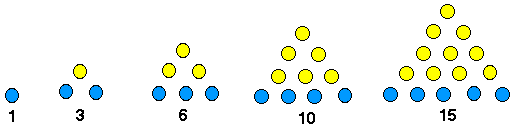
So he started to put them on the same graph paper as the unfinished six times table.
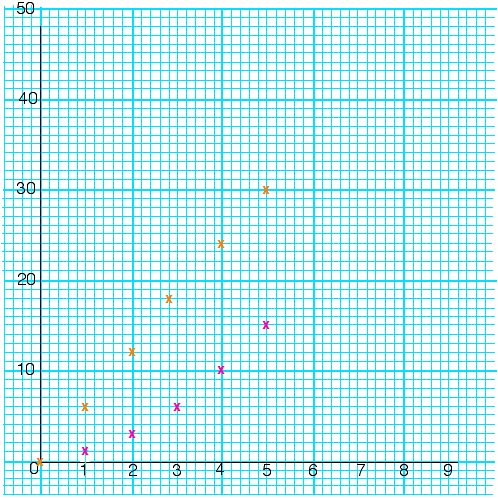
"It's not a very good straight line," he remarked to Andy who was sitting next to him.
"I think it's going to cross the six times line," answered Tom, "But you'll have to make a lot more of both of them. I'm going to try square numbers, I bet the tables one will cross that!"
Does the graph of the triangular numbers cross that of the six times table?
And if it does, where?
Does the graph of square numbers cross those of the times tables?
And if it does, where?
Getting Started
Draw the graphs on paper, on a graphing calculator or on a computer.
Student Solutions
Derek, of St John's Primary School, sent us his working on this problem:
The lines will cross when the bottom value and the side value of the two line sare the same, and the next triangle number is bigger than the next number in the six times table. I made a table of the triangle numbers and the six times table until this happened.
| Bottom value | Triangle number | Six times table |
| 1 | 1 | 6 |
| 2 | 3 | 12 |
| 3 | 6 | 18 |
| 4 | 10 | 24 |
| 5 | 15 | 30 |
| 6 | 21 | 36 |
| 7 | 28 | 42 |
| 8 | 36 | 48 |
| 9 | 45 | 54 |
| 10 | 55 | 60 |
| 11 | 66 | 66 |
| 12 | 78 | 72 |
| Bottom value | Square number | Six times table |
| 1 | 1 | 6 |
| 2 | 4 | 12 |
| 3 | 9 | 18 |
| 4 | 16 | 24 |
| 5 | 25 | 30 |
| 6 | 36 | 36 |
| 7 | 49 | 42 |
Teachers' Resources
Using NRICH Tasks Richly describes ways in which teachers and learners can work with NRICH tasks in the classroom.
Why do this problem?
This problem can be done when the group are occupied with making straight-line graphs of multiplication tables and similar material. It could just nudge certain learners into something new. If they do not know the triangular numbers they could be shown how to work them out first. Drawing the graphs on paper is most satisfactory, although a graphing calculator or a computer can be used.
Key questions
Possible extension
Learners could try sequences such as doubling or adding successively one, two, three. Alternatively this Matchsticks problem could be used.
Possible support
Some children might benefit from drawing the graphs of multiplication tables on paper. A graphing calculator or on a computer can also be used.