

Triangular Faces

 2 out of 3
This problem invites you to build 3D shapes using two different triangles. Can you make the shapes from the pictures?
Problem
Suppose we start with two types of triangles:

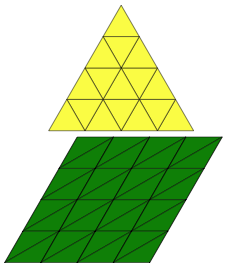
We will be putting them together to make 3D shapes.
Sometimes you need tabs to glue them together so you cut those out like these (here is a sheet of triangles with tabs):
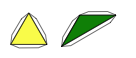
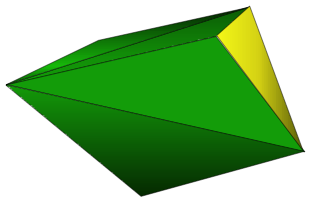
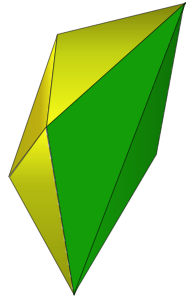
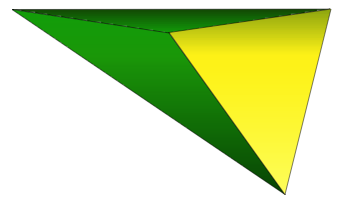
Getting Started
You might find it helpful to print off this sheet of coloured triangles and cut them out.
Can you begin to picture in your mind what the shape will look like?
Try joining two triangles together to start with, then add another one on, then another etc.
Don't be afraid to take apart what you've done to alter it if you discover something isn't quite right.
You could begin by joining the triangles together loosely with a small piece of sticky tape so you can easily cut them apart again if you find you want to change your mind.
This sheet will show some triangles with tabs on for joining in 3D.
Student Solutions
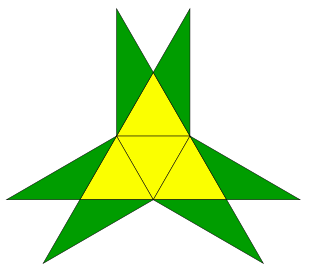
Cong Lu sent us nets of the two shapes in this problem. Here is the first one:
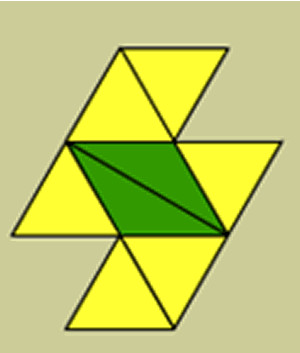
Here is the second one:
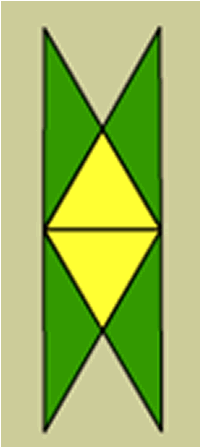
Well done. You might have drawn the net a different way, which is absolutely fine, so please send in your net if that's the case.
It can be quite tricky to check whether two nets produce the same shape, can't it? The visualisation is challenging! It can be a good idea to check by making the shape from the net.
Teachers' Resources
Using NRICH Tasks Richly describes ways in which teachers and learners can work with NRICH tasks in the classroom.
Why do this problem?
This activity encourages children to visualise 3D shapes and will help to reinforce language associated with properties of shapes.
Possible approach
You could introduce the problem by creating a simpler model of your own, made from the triangles (perhaps a tetrahedron). Show it to the class (making sure you turn it around for them to see it from different directions) and ask them what questions they would ask if you challenged them to make an identical model themselves. They might suggest:
- How many faces (or how many triangles) does the shape have?
- Are all the faces (or triangles used) the same?
- How do the faces join to each other?