
Olympic Measures
These Olympic quantities have been jumbled up! Can you put them back together again?

These hands-on activities are ideal for students aged 11-14 to use in maths clubs and whole-school maths events.
These Olympic quantities have been jumbled up! Can you put them back together again?

What happens when you add a three digit number to its reverse?
A colourful cube is made from little red and yellow cubes. But can you work out how many of each?
We started drawing some quadrilaterals - can you complete them?
Gabriel multiplied together some numbers and then erased them. Can you figure out where each number was?
Charlie and Abi put a counter on 42. They wondered if they could visit all the other numbers on their 1-100 board, moving the counter using just these two operations: ×2 and -5. What do you think?
Using some or all of the operations of addition, subtraction, multiplication and division and using the digits 3, 3, 8 and 8 each once and only once make an expression equal to 24.
Liam's house has a staircase with 12 steps. He can go down the steps one at a time or two at time. In how many different ways can Liam go down the 12 steps?
Show how this pentagonal tile can be used to tile the plane and describe the transformations which map this pentagon to its images in the tiling.
A monkey with peaches, keeps a fraction of them each day, gives the rest away, and then eats one. How long can his peaches last?
A 2 by 3 rectangle contains 8 squares and a 3 by 4 rectangle contains 20 squares. What sizes of rectangle contain exactly 100 squares? Can you find them all?
Using your knowledge of the properties of numbers, can you fill all the squares on the board?
Can you describe this route to infinity? Where will the arrows take you next?
Is there a temperature at which Celsius and Fahrenheit readings are the same?
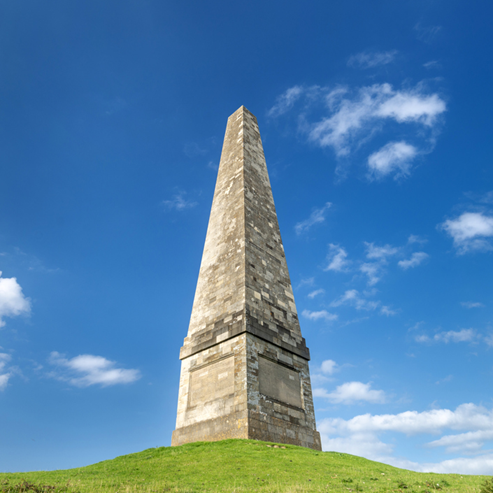
In the ancient city of Atlantis a solid rectangular object called a Zin was built in honour of the goddess Tina. Your task is to determine on which day of the week the obelisk was completed.
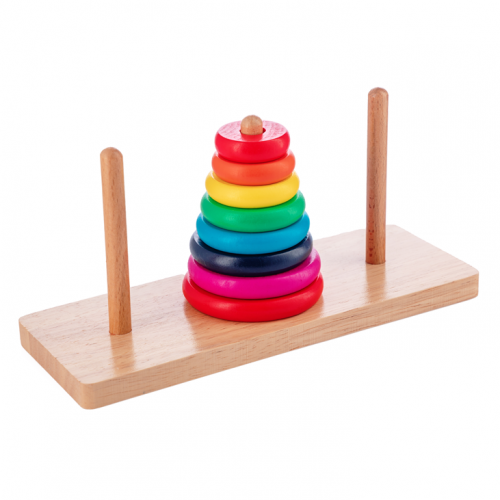
The Tower of Hanoi is an ancient mathematical challenge. Working on the building blocks may help you to explain the patterns you notice.
Think of a two digit number, reverse the digits, and add the numbers together. Something special happens...
Can you recreate squares and rhombuses if you are only given a side or a diagonal?
Can you find ways to put numbers in the overlaps so the rings have equal totals?
Play around with the Fibonacci sequence and discover some surprising results!