
Consecutive Seven
Can you arrange these numbers into 7 subsets, each of three numbers, so that when the numbers in each are added together, they make seven consecutive numbers?


Experiment with the interactivity of "rolling" regular polygons, and explore how the different positions of the dot affects the distance it travels at each stage.
Find the frequency distribution for ordinary English, and use it to help you crack the code.
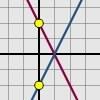
How does the position of the line affect the equation of the line? What can you say about the equations of parallel lines?
This problem offers you two ways to test reactions - use them to investigate your ideas about speeds of reaction.
Crosses can be drawn on number grids of various sizes. What do you notice when you add opposite ends?
How many pairs of numbers can you find that add up to a multiple of 11? Do you notice anything interesting about your results?
Investigate what happens to the equations of different lines when you reflect them in one of the axes. Try to predict what will happen. Explain your findings.
Investigate what happens to the equation of different lines when you translate them. Try to predict what will happen. Explain your findings.