
What's in a Name?
Here's a very elementary code that requires young children to read a table, and look for similarities and differences.
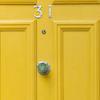
Investigate what happens when you add house numbers along a street in different ways.
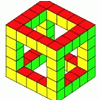
I've made some cubes and some cubes with holes in. This challenge invites you to explore the difference in the number of small cubes I've used. Can you see any patterns?
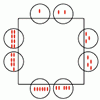
Sweets are given out to party-goers in a particular way. Investigate the total number of sweets received by people sitting in different positions.
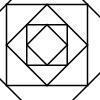
These pictures were made by starting with a square, finding the half-way point on each side and joining those points up. You could investigate your own starting shape.
In this investigation we are going to count the number of 1s, 2s, 3s etc in numbers. Can you predict what will happen?
Make new patterns from simple turning instructions. You can have a go using pencil and paper or with a floor robot.
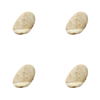
Place four pebbles on the sand in the form of a square. Keep adding as few pebbles as necessary to double the area. How many extra pebbles are added each time?
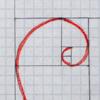
Can you make a spiral for yourself? Explore some different ways to create your own spiral pattern and explore differences between different spirals.