
article
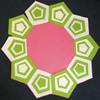
Purposeful Paper Folding
In this article for primary teachers, Fran describes her passion for paper folding as a springboard for mathematics.
In this article for primary teachers, Fran describes her passion for paper folding as a springboard for mathematics.
This article for primary teachers discusses how we can help learners generalise and prove, using NRICH tasks as examples.
In this article for Primary teachers, Ems explores three essential features of proof, all of which can be developed in the context of primary mathematics through talk.
A paradox is a statement that seems to be both untrue and true at the same time. This article looks at a few examples and challenges you to investigate them for yourself.
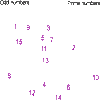
What does logic mean to us and is that different to mathematical logic? We will explore these questions in this article.
This article stems from research on the teaching of proof and offers guidance on how to move learners from focussing on experimental arguments to mathematical arguments and deductive reasoning.

These formulae are often quoted, but rarely proved. In this article, we derive the formulae for the volumes of a square-based pyramid and a cone, using relatively simple mathematical concepts.
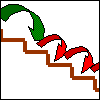
Spotting patterns can be an important first step - explaining why it is appropriate to generalise is the next step, and often the most interesting and important.

This article for pupils and teachers looks at a number that even the great mathematician, Pythagoras, found terrifying.
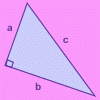
The first of two articles on Pythagorean Triples which asks how many right angled triangles can you find with the lengths of each side exactly a whole number measurement. Try it!