Place value

  • Binary Squares
    problem

    Binary Squares

    Age
    16 to 18
    Challenge level
    2 out of 3

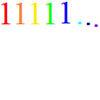
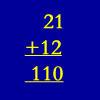
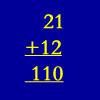
    If a number N is expressed in binary by using only 'ones,' what can you say about its square (in binary)?
  • Basic Rhythms
    problem

    Basic Rhythms

    Age
    16 to 18
    Challenge level
    2 out of 3

    Explore a number pattern which has the same symmetries in different bases.

  • Learn About Number Bases
    article

    Learn About Number Bases

    We are used to writing numbers in base ten, using 0, 1, 2, 3, 4, 5, 6, 7, 8, and 9. Eg. 75 means 7 tens and five units. This article explains how numbers can be written in any number base.
  • Adding with the Abacus
    article

    Adding With the Abacus

    Nowadays the calculator is very familiar to many of us. What did people do to save time working out more difficult problems before the calculator existed?
  • Ten-frames Games
    article

    Ten-Frames Games

    These games use ten-frames to develop children's 'sense of ten'.
  • Path of Discovery Series 3: I do and I understand
    article

    Path of Discovery Series 3: I Do and I Understand

    Marion Bond recommends that children should be allowed to use 'apparatus', so that they can physically handle the numbers involved in their calculations, for longer, or across a wider ability band, than is currently the norm.

  • Journeys on the Gattegno Tens Chart
    article

    Journeys on the Gattegno Tens Chart

    Alf describes how the Gattegno chart helped a class of 7-9 year olds gain an awareness of place value and of the inverse relationship between multiplication and division.

  • Activities on the Gattegno Chart
    article

    Activities on the Gattegno Chart

    In this article, Alf outlines six activities using the Gattegno chart, which help to develop understanding of place value, multiplication and division.