
Powers and roots

  • The Root of the Problem
    problem
    Favourite

    The Root of the Problem

    Age
    14 to 18
    Challenge level
    2 out of 3

    Find the sum of this series of surds.
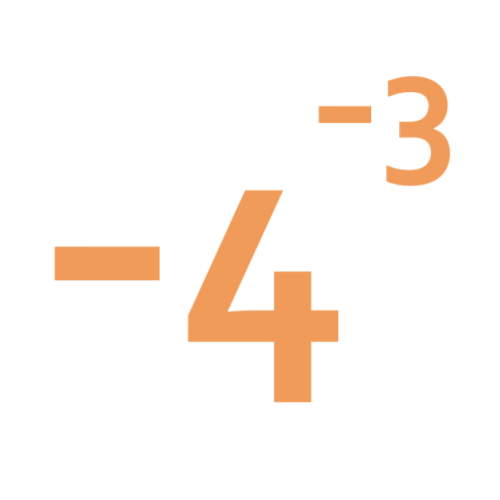
  • Negative 3 to the power of negative 3.
    problem
    Favourite

    Negative Powers

    Age
    14 to 18
    Challenge level
    2 out of 3

    What does this number mean? Which order of 1, 2, 3 and 4 makes the highest value? Which makes the lowest?

  • Ab Surd Ity
    problem
    Favourite

    Ab Surd Ity

    Age
    16 to 18
    Challenge level
    1 out of 3

    Find the values of $\sqrt{2 + \sqrt 3}- \sqrt{2 - \sqrt3}$ and of $\root 3 \of {2 + \sqrt 5}+ \root 3 \of {2 - \sqrt 5}$

  • How Many Solutions?
    problem
    Favourite

    How Many Solutions?

    Age
    16 to 18
    Challenge level
    1 out of 3

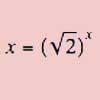
    Find all the solutions to the this equation.

  • Em'power'ed
    problem
    Favourite

    Em'power'ed

    Age
    16 to 18
    Challenge level
    2 out of 3

    Find the smallest numbers a, b, and c such that: a^2 = 2b^3 = 3c^5 What can you say about other solutions to this problem?

  • Giants
    problem
    Favourite

    Giants

    Age
    16 to 18
    Challenge level
    2 out of 3

    Which is the bigger, 9^10 or 10^9 ? Which is the bigger, 99^100 or 100^99 ?

  • In Between
    problem
    Favourite

    In Between

    Age
    16 to 18
    Challenge level
    2 out of 3

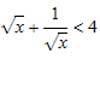
    Can you find the solution to this algebraic inequality?

  • Absurdity Again
    problem

    Absurdity Again

    Age
    16 to 18
    Challenge level
    1 out of 3
    What is the value of the integers a and b where sqrt(8-4sqrt3) = sqrt a - sqrt b?
  • Route to Root
    problem

    Route to Root

    Age
    16 to 18
    Challenge level
    1 out of 3
    A sequence of numbers x1, x2, x3, ... starts with x1 = 2, and, if you know any term xn, you can find the next term xn+1 using the formula: xn+1 = (xn + 3/xn)/2 . Calculate the first six terms of this sequence. What do you notice? Calculate a few more terms and find the squares of the terms. Can you prove that the special property you notice about this sequence will apply to all the later terms of the sequence? Write down a formula to give an approximation to the cube root of a number and test it for the cube root of 3 and the cube root of 8. How many terms of the sequence do you have to take before you get the cube root of 8 correct to as many decimal places as your calculator will give? What happens when you try this method for fourth roots or fifth roots etc.?
  • Mod 7
    problem

    Mod 7

    Age
    16 to 18
    Challenge level
    1 out of 3
    Find the remainder when 3^{2001} is divided by 7.