Conjecturing and generalising

  • Hollow Squares
    problem
    Favourite

    Hollow Squares

    Age
    14 to 16
    Challenge level
    1 out of 3

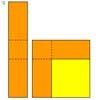
    Which armies can be arranged in hollow square fighting formations?
  • Two Ladders
    problem
    Favourite

    Two Ladders

    Age
    14 to 16
    Challenge level
    2 out of 3

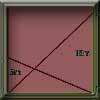
    Two ladders are propped up against facing walls. At what height do the ladders cross?

  • Expenses
    problem
    Favourite

    Expenses

    Age
    14 to 16
    Challenge level
    2 out of 3

    What is the largest number which, when divided into these five numbers in turn, leaves the same remainder each time?

  • Plus Minus
    problem
    Favourite

    Plus Minus

    Age
    14 to 16
    Challenge level
    2 out of 3

    Can you explain the surprising results Jo found when she calculated the difference between square numbers?

  • Of all the areas
    problem
    Favourite

    Of All the Areas

    Age
    14 to 16
    Challenge level
    2 out of 3

    Can you find a general rule for finding the areas of equilateral triangles drawn on an isometric grid?

  • Fair Shares?
    problem
    Favourite

    Fair Shares?

    Age
    14 to 16
    Challenge level
    2 out of 3

    A mother wants to share some money by giving each child in turn a lump sum plus a fraction of the remainder. How can she do this to share the money out equally?

  • What's Possible?
    problem
    Favourite

    What's Possible?

    Age
    14 to 16
    Challenge level
    2 out of 3

    Many numbers can be expressed as the difference of two perfect squares. What do you notice about the numbers you CANNOT make?

  • Why 24?
    problem
    Favourite

    Why 24?

    Age
    14 to 16
    Challenge level
    2 out of 3

    Take any prime number greater than 3 , square it and subtract one. Working on the building blocks will help you to explain what is special about your results.

  • Pick's Theorem
    problem
    Favourite

    Pick's Theorem

    Age
    14 to 16
    Challenge level
    2 out of 3

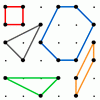
    Polygons drawn on square dotty paper have dots on their perimeter (p) and often internal (i) ones as well. Find a relationship between p, i and the area of the polygons.

  • problem
    Favourite

    Triangles and Petals

    Age
    14 to 16
    Challenge level
    2 out of 3

    An equilateral triangle rotates around regular polygons and produces an outline like a flower. What are the perimeters of the different flowers?