
Conjecturing and generalising

  • Generating Triples
    problem
    Favourite

    Generating Triples

    Age
    14 to 16
    Challenge level
    1 out of 3

    Sets of integers like 3, 4, 5 are called Pythagorean Triples, because they could be the lengths of the sides of a right-angled triangle. Can you find any more?

  • Beelines
    problem
    Favourite

    Beelines

    Age
    14 to 16
    Challenge level
    1 out of 3

    Is there a relationship between the coordinates of the endpoints of a line and the number of grid squares it crosses?

  • Hollow Squares
    problem
    Favourite

    Hollow Squares

    Age
    14 to 16
    Challenge level
    1 out of 3

    Which armies can be arranged in hollow square fighting formations?

  • Two Ladders
    problem
    Favourite

    Two Ladders

    Age
    14 to 16
    Challenge level
    2 out of 3

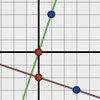
    Two ladders are propped up against facing walls. At what height do the ladders cross?

  • Odd Differences
    problem
    Favourite

    Odd Differences

    Age
    14 to 16
    Challenge level
    2 out of 3

    The diagram illustrates the formula: 1 + 3 + 5 + ... + (2n - 1) = n² Use the diagram to show that any odd number is the difference of two squares.

  • Expenses
    problem
    Favourite

    Expenses

    Age
    14 to 16
    Challenge level
    2 out of 3

    What is the largest number which, when divided into these five numbers in turn, leaves the same remainder each time?

  • Plus Minus
    problem
    Favourite

    Plus Minus

    Age
    14 to 16
    Challenge level
    2 out of 3

    Can you explain the surprising results Jo found when she calculated the difference between square numbers?

  • Of all the areas
    problem
    Favourite

    Of All the Areas

    Age
    14 to 16
    Challenge level
    2 out of 3

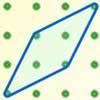
    Can you find a general rule for finding the areas of equilateral triangles drawn on an isometric grid?

  • Fair Shares?
    problem
    Favourite

    Fair Shares?

    Age
    14 to 16
    Challenge level
    2 out of 3

    A mother wants to share some money by giving each child in turn a lump sum plus a fraction of the remainder. How can she do this to share the money out equally?

  • What's Possible?
    problem
    Favourite

    What's Possible?

    Age
    14 to 16
    Challenge level
    2 out of 3

    Many numbers can be expressed as the difference of two perfect squares. What do you notice about the numbers you CANNOT make?